Yes — but not on day one. Saudi banks won’t open a corporate account until your company already has a Commercial Registration and a MISA license in hand. Once those two documents exist, the account-opening process becomes straightforward, provided your paperwork and signatory are ready.
This guide walks through exactly what banks ask for, how long it takes, and where most foreign investors get stuck.
A corporate bank account isn't optional in Saudi Arabia. You need it to deposit your paid-up share capital, pay staff through the Wage Protection System, settle ZATCA tax, and receive payment from clients. No account means no functioning company — even if your CR is already issued.
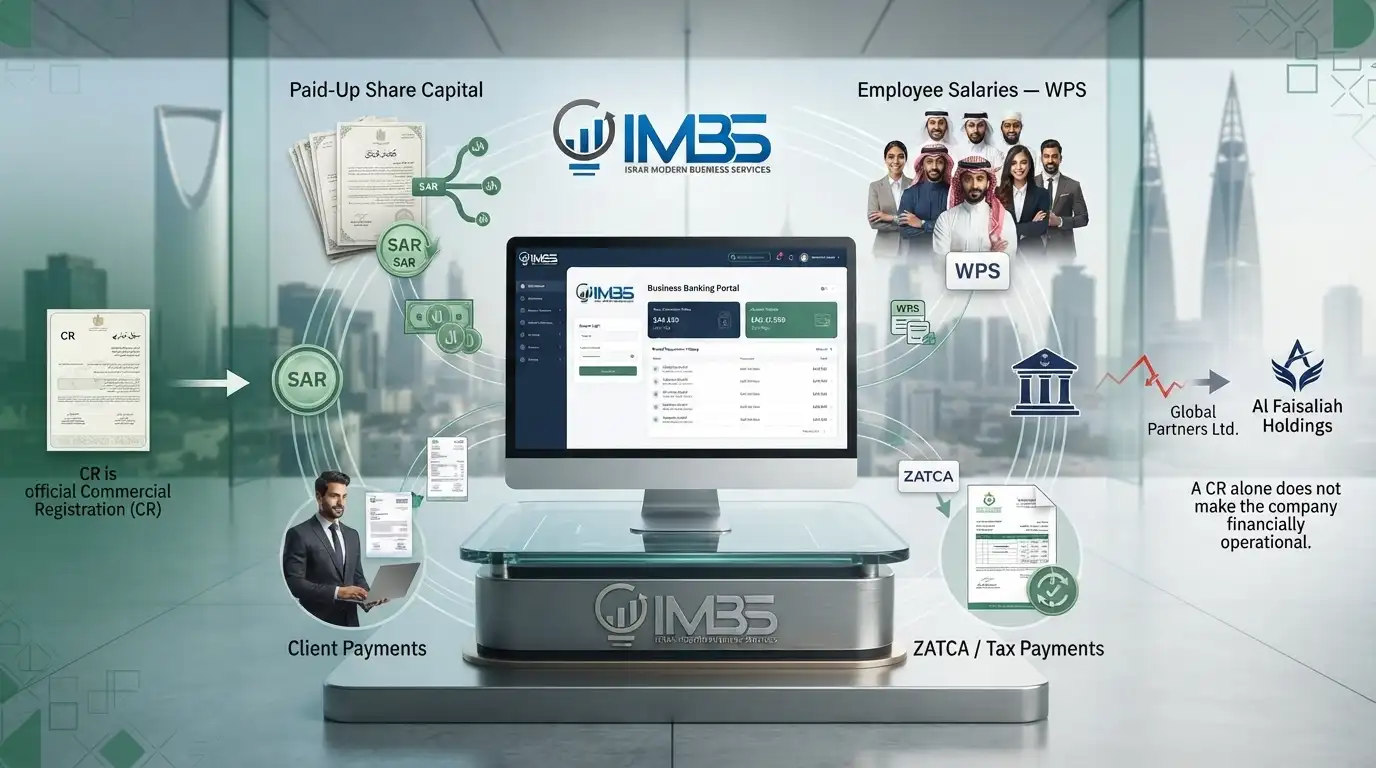
Here’s the part most guides skip: your capital account and your operating account are two different things. The capital account holds your paid-up capital during incorporation and can’t be used for daily transactions. Once your company is fully registered, the bank converts it into an operating account you can actually run your business through.
Every Saudi bank runs its own internal checklist, but the core document set is consistent across institutions:
Company documents
Signatory documents
If you have a foreign parent company
Missing even one of these is the single most common reason applications stall.
Timelines vary by bank and by how clean your ownership structure is. A simple structure — one or two individual shareholders — can clear in a matter of days. More complex structures, especially those involving a foreign parent company, can take several weeks while the bank verifies attested documents and ownership charts.
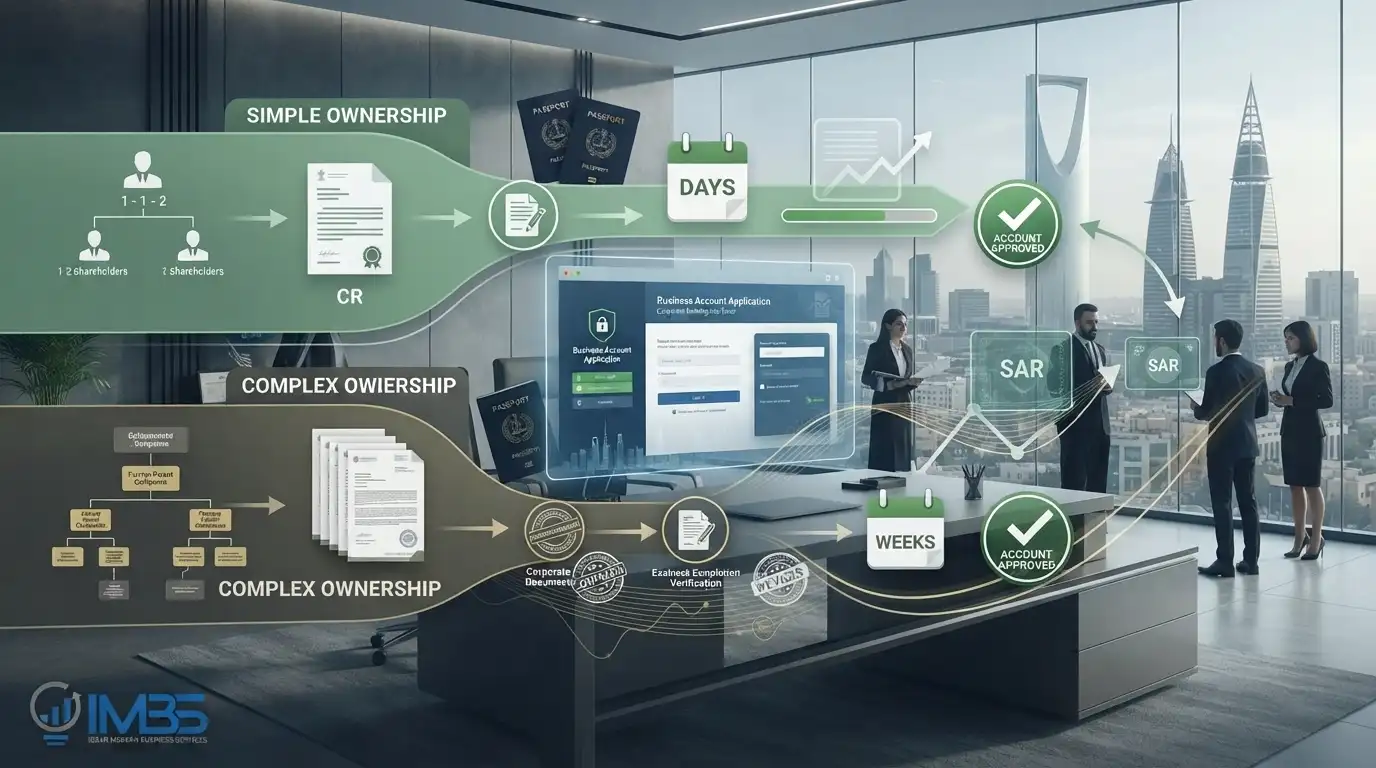
The honest answer: budget for delays. Saudi banks are thorough with foreign-owned applicants, and rushing the document set almost always backfires into a rejection and a restart.
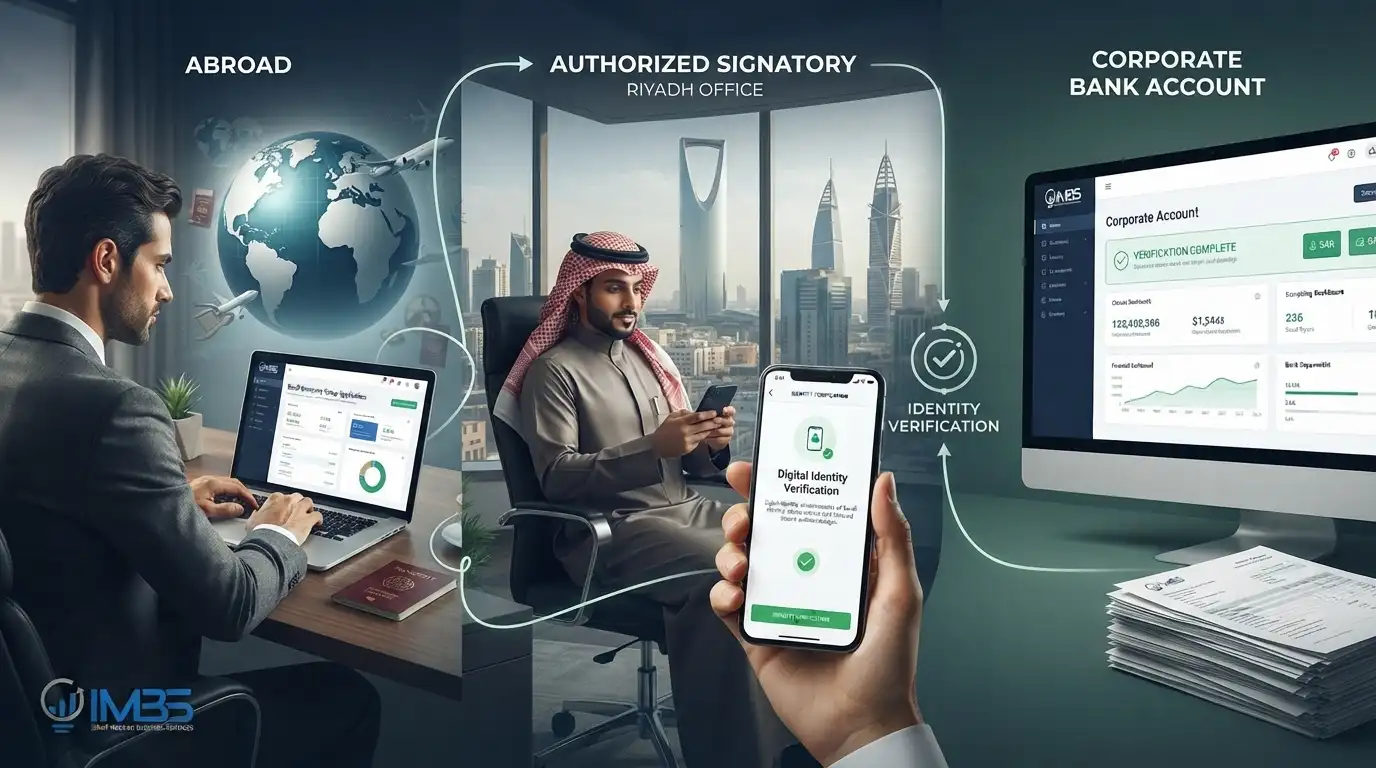
This is where most foreign investors get caught off guard. Your authorized signatory must complete identity verification through Nafath, which typically requires a valid Iqama. A shareholder sitting abroad with only a passport cannot complete this step remotely.If your General Manager doesn't yet hold Saudi residency, this becomes your critical path — not the bank paperwork itself.
Three things sink most first attempts:
None of these are complicated on their own. They just need to be handled in the right order, before you submit.
Skip a step, and the bank sends you back to fix it — which is exactly where most delays come from.
Yes. Foreign-owned companies can open a corporate account once they hold a valid MISA license and Commercial Registration. IMBS coordinates document preparation so the application moves without delays.
Banks typically require your Commercial Registration, MISA license, Articles of Association, National Address certificate, and a ZATCA tax number. IMBS reviews your documents before submission to reduce back-and-forth with the bank.
Most banks require your authorized signatory — usually the General Manager on the CR — to complete identity verification in person or through Nafath. A shareholder abroad holding only a passport generally cannot complete onboarding remotely.
Timelines usually range from a few days to several weeks, depending on your ownership structure and documentation. Simpler structures with one or two shareholders tend to clear fastest.
Yes. The authorized signatory typically needs a valid Iqama and must pass identity verification through Nafath before the bank will activate the account.
Some banks apply minimum deposit or capital thresholds for foreign-owned entities. IMBS can advise which banks fit your company’s capital structure before you apply.
No. Your company must already hold a Commercial Registration and MISA license before a Saudi bank will open a corporate account.
A capital account holds your paid-up share capital during incorporation and cannot be used for daily transactions. Once your company is registered, this converts into an operating account for regular business activity.
Some local banks process foreign-owned applications faster than others, and processes vary by institution. IMBS can point you toward banks with a track record of smoother onboarding for your specific ownership structure.
Yes, but banks require attested parent company documents — Articles of Association, an active commercial license, and a full ownership structure chart with shareholder details.
Most delays come from inconsistent documentation, unclear ownership structures, or a signatory who hasn’t completed Iqama and Nafath verification. IMBS reviews your file in advance to catch these issues before submission.
Yes, several Saudi banks offer accounts in USD, GBP and SAR alongside the standard riyal account, though not all support full online banking for foreign-currency balances.
Yes. Payroll runs through the Wage Protection System, which requires an active corporate account, and GOSI contributions are also paid from it.
IMBS supports your account-opening file — document preparation, bank coordination, and signatory readiness — as part of your overall setup, so it isn’t a separate process you manage alone.
Find answers to common questions about business account in Saudi Arabia.